
Everyday Brain: A New Way to Cook and Save Money
Food is Expensive.
Let’s Save Money on Groceries.
Today, at our grocery store:
- Ground beef is $7.79 a pound ($3.70 in 2019)
- Greek plain yogurt / 32 oz $6.29 — the cheap kind! ($3.48 in 2019)
- A gallon of milk is $4.29 ($3.04 in 2019)
- Strawberries 16 oz are $5.49 ($3.28 in 2019)
- Spinach 5 oz is $3.79 ($2.99 in 2019)
Today, I want to save money on groceries.
But that’s not where my story began.
After my stroke, I had trouble reading recipe directions because of aphasia. I needed to find an easier way to cook.
And what I discovered surprised me.
I found a way to spend less money on food while still eating well. In fact, I think I have become a better cook.
This story is really about two people: my cooking and my husband Keith’s shopping.
Together, we have changed the way we buy food and prepare our meals.
And we are spending a lot less money.
Number One: My Discovery
Last November, I started experimenting with artificial intelligence — ChatGPT.
One of my first experiments was cooking.
Before that, I relied on The New York Times Cooking. I loved trying interesting recipes, and the food was often delicious.
But cooking had become difficult.
Because of aphasia, I could read the ingredients but had trouble following the directions.
And there were often so many ingredients to buy!
I was frustrated by the rising cost of food, but that wasn’t why I started using AI.
I was looking for an easier way to cook.
So I tried something different.
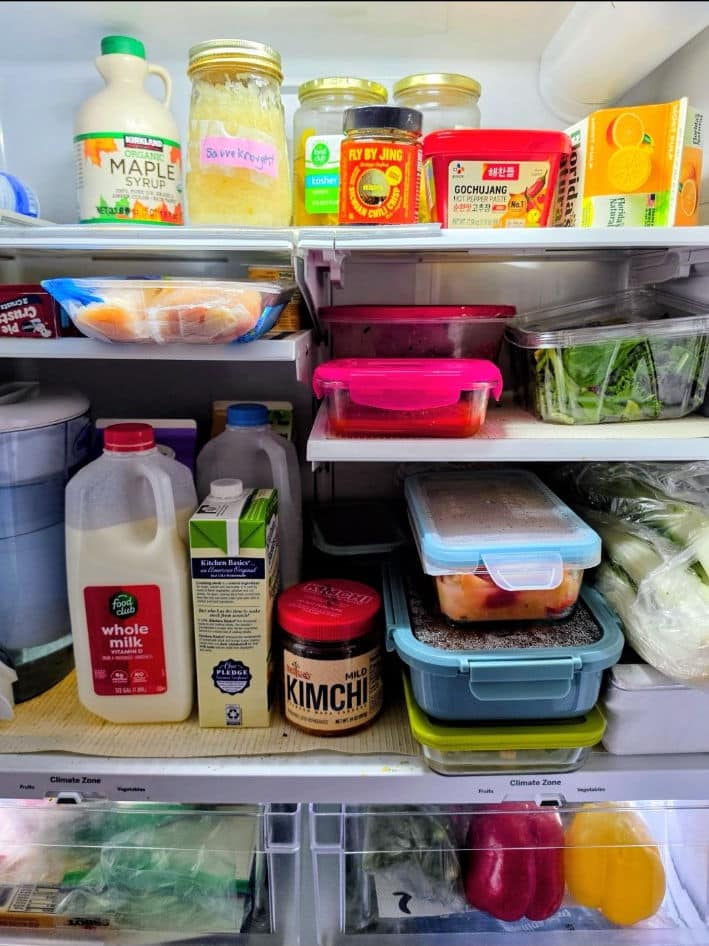
I told ChatGPT what was in my kitchen and asked it to suggest something I could make.
Voilà!
It gave me ideas using food I already had.
Nothing particularly surprising. But it worked!
And I didn’t need complicated directions.
I already knew how to cook in a skillet, a saucepan, or an oven at 425°F.
I could figure out the rest.
And suddenly something else started happening.
I wasn’t throwing away nearly as much food.
I used the vegetables in my refrigerator, the fruit on the counter, and the cans in my cupboards.
Instead of buying ingredients for a particular recipe, I looked at what I already had and figured out what to make.
That was a big change.
Number Two: Keith’s Discovery
My Husband had another idea.
Buy food on sale.
He shops at three stores in our area: Stop & Shop, Big Y, and Target.
His approach is simple.
First, look for sales. Buy what we can use when the price is good. Then buy whatever else we need.
Now these two ideas work together.
Keith buys the food on sale.
I look at what we have in the kitchen.
And ChatGPT helps me come up with ideas for using it.
We waste less food and spend less money.
What Happened to Our Food Budget?
For years, I thought we were spending about $200 a week on groceries. I wasn’t really calculating it. That was just my impression.
Since June 2026, I have been keeping track of our grocery spending.
So far, we have spent on average $163.51 a week on grocery food.
Keith and I estimate that our food costs are now about 18.5% less then we were spending six months ago.
That is a meaningful change.
And in the process, something else happened.
I became a more adventurous cook.
With the help of my AI Teacher, I began experimenting with new foods and different combinations.
Suddenly, I was cooking Asian, Mediterranean, and African-inspired dishes.
I started using spices I had bought years ago but never really understood how to use.
And the food was good!
We all have different tastes, so I’m not going to tell you exactly what to cook.
That’s not the point.
The point is simple:
- Use the food you already have.
- Buy more of your groceries when they are on sale.
- Find creative ways to turn those ingredients into meals.
You might be surprised by how much money you can save.
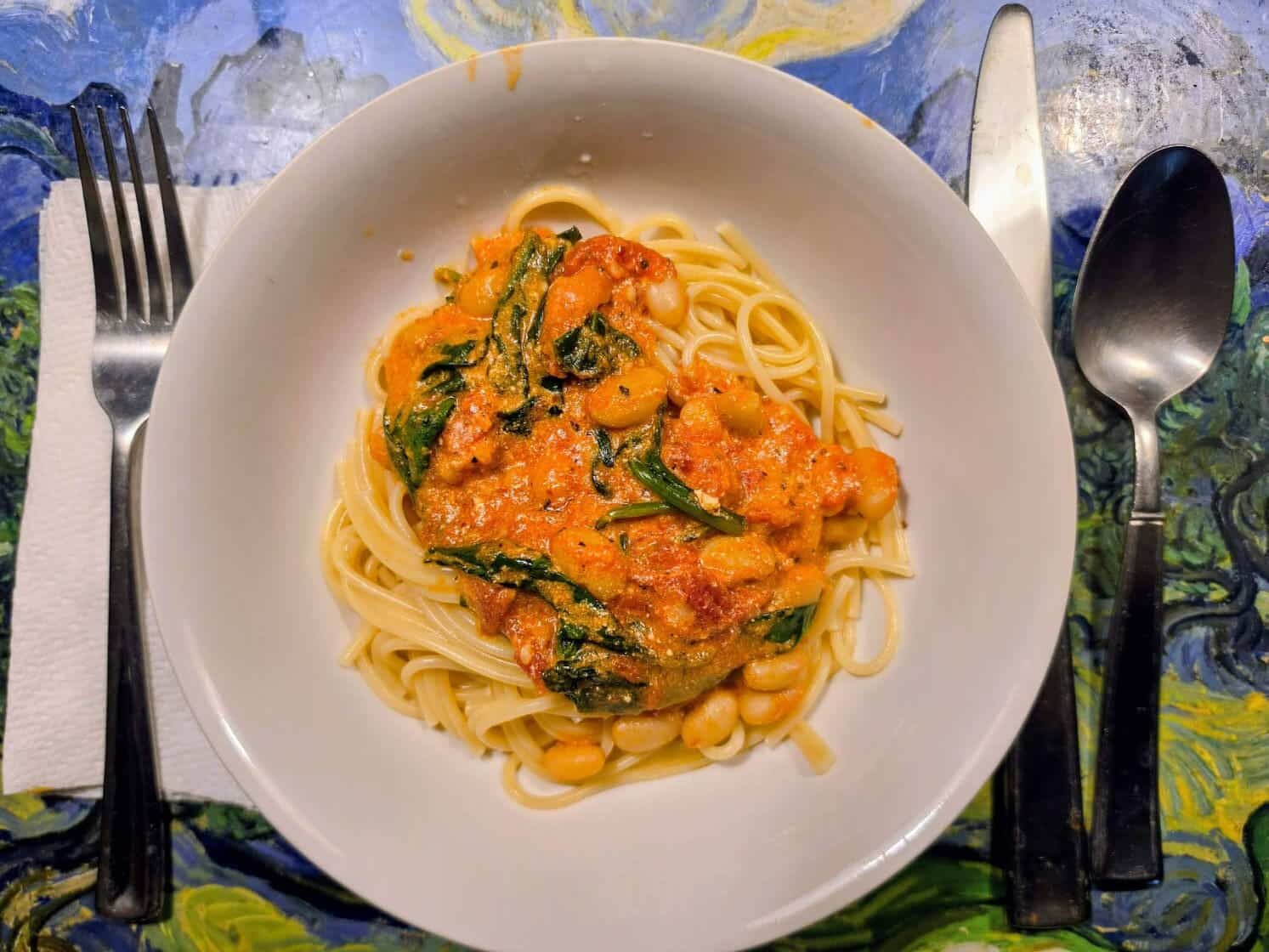
Here is a recipe.
“Here are things in my kitchen: Pasta, Tomatoes. White beans. Plain Greek Yogurt. Kimchi. Spinach and spice. What can I make tonight?
AI Teacher suggested:
Creamy Tomato, White Bean, Spinach Pasta
Pasta
Tomatoes (fresh or canned)
White beans (canned and drained)
2 big handful spinach
Olive oil and garlic
Oregano, basil, red pepper flakes
Greek Plain Yogurt
Here is how to make it. (I don’t use the Directions because it’s hard to read and for some reason I can’t hear it using Text to Speech:
1. Cook pasta. Save 1/2 cup pasta water.
2. Saute garlic in olive oil.
3. Add tomatoes, spices. Simmer for a while.
4. Add white beans and spinach. Cook until spinach wilts.
5. Stir in pasta.
6. Turn off the heat. This is important!
7. In a small bowl, mix Greek yogurt with 2–3 tablespoons of warm pasta water.
8. Stir the yogurt mixture into the pasta. Don’t boil the pasta after adding yogurt. High heat can make yogurt separate and look grainy. (I didn’t know that!!!)
9. Add more pasta water if you want it creamier.
10. Finish with black pepper, basil and a little olive oil.
Why Is This an Everyday Brain Story?
Everyone is worried about the cost of food.
For a family of four, grocery bills can be a real challenge.
But for people living with aphasia, stroke, or another brain injury, financial problems can be even harder.
Some people can no longer work. Others cannot earn as much as they once did.
Medical expenses and insurance costs can add to the burden.
Families worry.
I am fortunate that Keith and I can afford our food. But I also know that many people are struggling.
And I wanted to share something that might help.
I started using AI because aphasia made cooking difficult.
I discovered a simpler way to cook.
Then Keith and I discovered that we could save a substantial amount of money.
And somewhere along the way, I became a better cook.
That is what Everyday Brain is about.
Finding new ways to do things when your brain doesn’t work the way it used to.
Sometimes the results are even better than you expected.