
Aphasia on the Road Hyde Park: FDR, Vanderbilt & Eleanor
FDR, Vanderbilt, Trees & Eleanor
Aphasia on the Road, Hyde Park, NY
For years, Keith and I have wanted to see Franklin D. Roosevelt’s home, museum and library in Hyde Park, New York.
Luckily, I knew a lot about FDR: the Great Depression and World War II. We visited FDR’s Little White House in Georgia, where he spent time after developing polio and where he died in 1945.
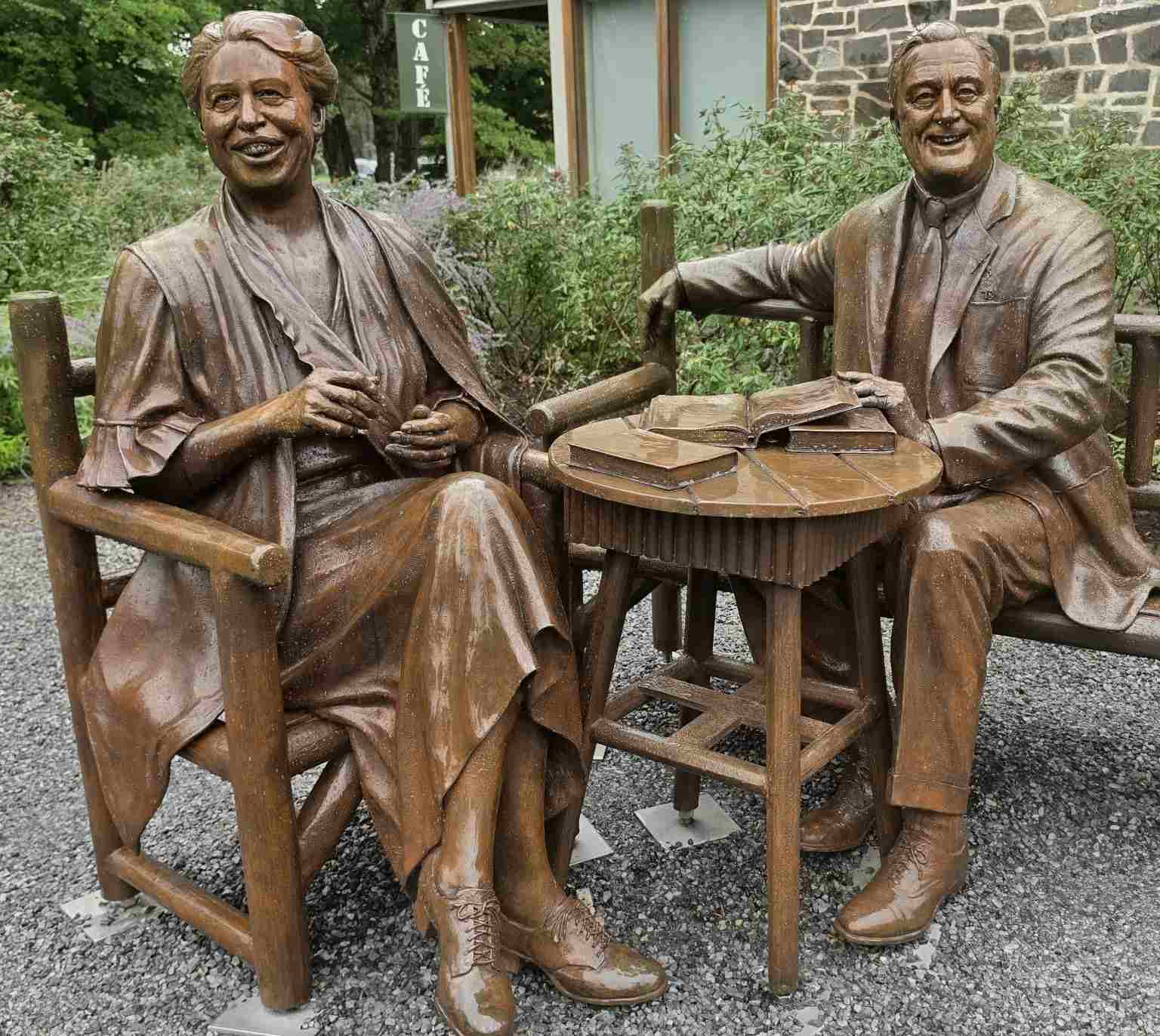
Franklin and Eleanor Roosevelt in Hyde Park, New York.
The story of FDR and his wife Eleanor, Depression, and World War II was recent in my family. My grandparents lost their companies during the Depression. My Mom moved to New York City for a few years in the 1930s because her Uncle Spunk and Aunt Sadie were teachers. That meant they had an income.
And I was born just seven years after FDR died.
Franklin and Eleanor at FDR’s Home
I love museums. But for me, this museum was wonderful and also hard.
There were dozens of printed panels. I couldn’t understand them. With aphasia, I have trouble reading paragraphs. At home I can see the words and hear them at the same time using Text-to-Speech. At the museum, I watched the movies and looked at the pictures.
And some of what I learned about the New Deal was already part of my own life.

The New Deal changed American life during the Great Depression.
I know about Social Security. At age 74, I have it.
And then there was the Civilian Conservation Corps (CCC).
I love National and State Parks. I’ve seen CCC work in North Dakota, Arkansas, Georgia, Florida, Michigan, New Hampshire and Maine. There was even a CCC camp about a mile from my house in Connecticut.
Young men worked in forests and parks, building trails, roads and buildings and planting trees.
And the CCC knew about trees.
More on that later.
FDR and Vanderbilt
Turns out Vanderbilt Mansion was right next door to FDR’s house.
They were both rich as rich could be but otherwise they were completely different.
The Roosevelts were old money.
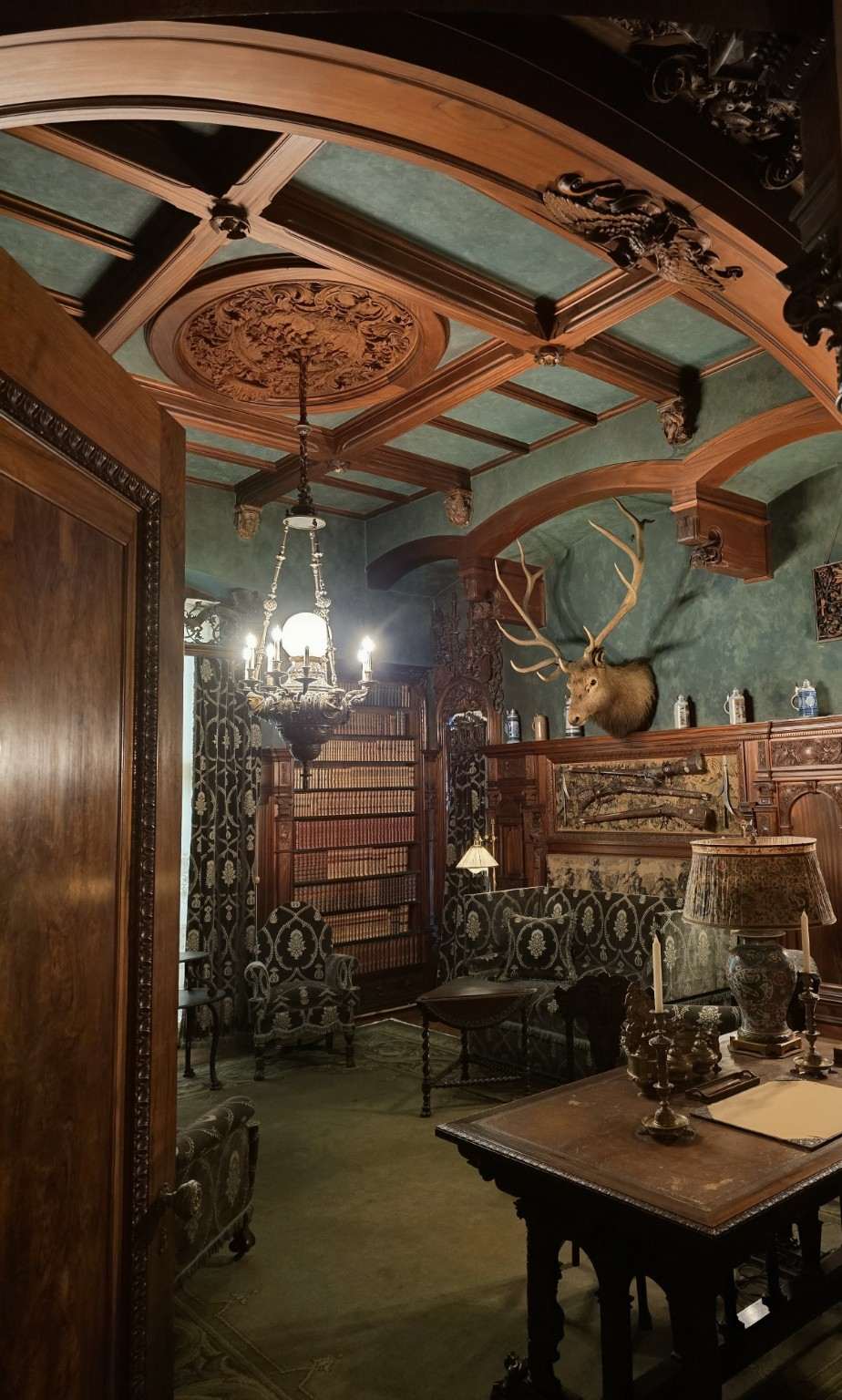
Inside Vanderbilt Mansion in Hyde Park, New York.
The Vanderbilts were new money.
The Vanderbilt family made a fortune in ships and railroads during the Gilded Age. And later generations built mansions. I have now seen three of them: Biltmore in Asheville, North Carolina, The Breakers in Newport, Rhode Island, and Vanderbilt Mansion in Hyde Park, New York.
They were BIG mansions.
The one in Hyde Park was modest.
Only 16 bedrooms.
The estate had more than 60 employees, even though Frederick and Louise Vanderbilt lived there only a few months each year.
It was a nice mansion as mansions go.
But what was really surprising was the trees.
(I am back at the trees.)
Frederick Vanderbilt died in 1938 and left the estate to his wife’s niece. She briefly tried to sell it, but eventually donated the mansion, its furnishings and about 200 acres to the National Park Service.
FDR, their neighbor, helped make that happen. He wanted the estate preserved.
And one of the reasons was the trees.
Let’s Talk About American Chestnuts
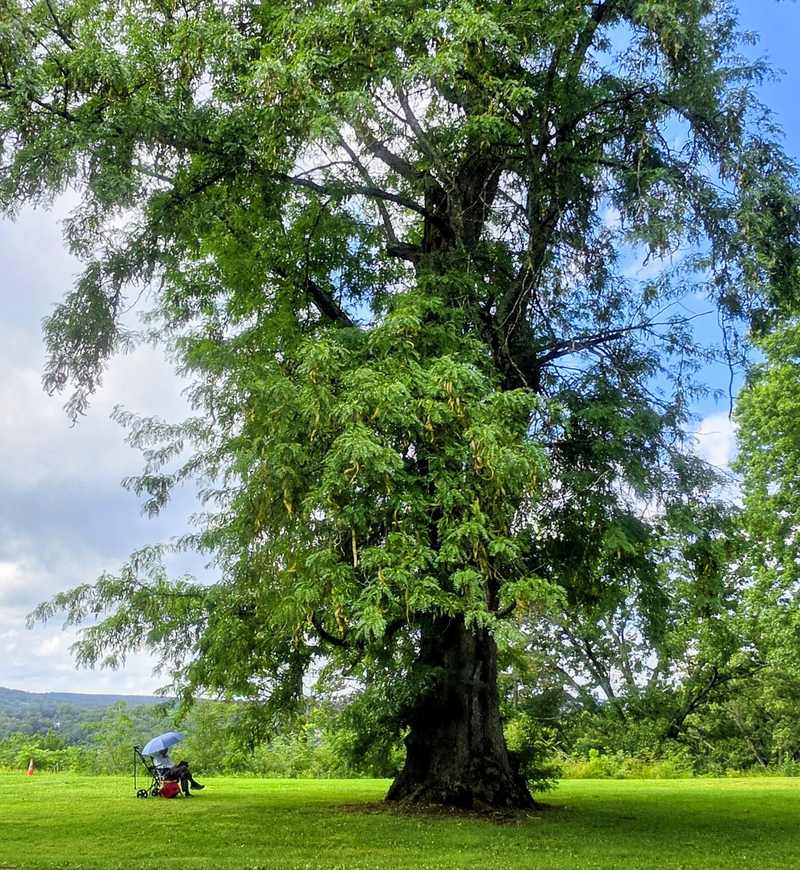
The trees of Hyde Park became an unexpected part of my story. Photo by Laura Malis.
American chestnuts once filled the forests of the eastern United States. They could grow more than 100 feet tall.
Then came chestnut blight. Within 50 years, it had virtually destroyed the American chestnut forests.
When FDR became President, forests were important to him. The Civilian Conservation Corps (CCC) planted more than three billion trees during its nine years.
But FDR wasn’t interested only in forests across the country.
He knew the trees on his own property in Hyde Park. In fact, he planted nearly 500,000 trees there during his lifetime.
And his favorite tree was the Tulip Poplar.
My husband Keith says tulip trees are special because they grow fast and very straight. They also have beautiful tulip-shaped flowers.
(I forgot to mention that Keith knows a lot about trees.)
And now this story means more than I imagined.
You see, my house in Guilford, Connecticut was built in 1830. About 90 percent of the wood in the house is American chestnut—from the basement to the attic.
The man who built it, John Hooker Dudley, built it using chestnut trees around our house.
But the three bedrooms on the second floor aren’t chestnut …
They’re Tulip Poplar, FDR’s favorite tree.
I have lived in this house for 30 years and had no idea how its trees connected to what I was learning about FDR until I started writing this story.
And Finally Eleanor
When I thought about Eleanor Roosevelt, I thought about my Mom.
Mom was born in 1928 and died in 2026.
Mom loved Eleanor.
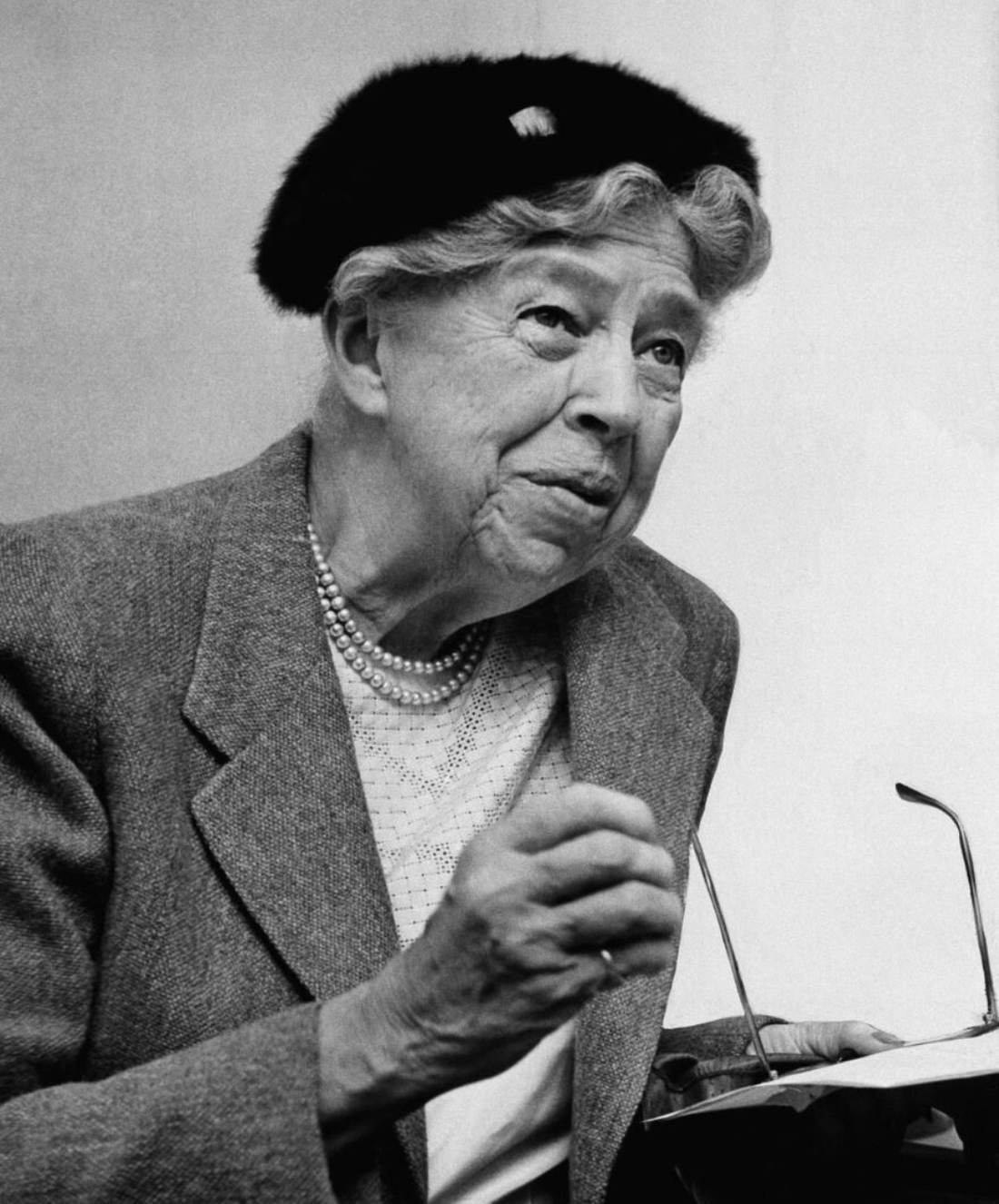
Eleanor Roosevelt. Courtesy of the Franklin D. Roosevelt Library archives.
I think because she saw what a woman could do on her own, with or without her husband.
Eleanor became a new kind of First Lady. She traveled around the country, held press conferences just for female reporters, and spoke about women, poor people and civil rights.
When the Daughters of the American Revolution refused to let African American singer Marian Anderson perform at Constitution Hall, Eleanor resigned from the organization.
She wrote a nationally syndicated column, My Day, from 1935 until shortly before her death in 1962.
And after FDR died, Eleanor didn’t stop. She became a delegate to the United Nations and chaired the UN Commission on Human Rights.
Eleanor visited people poor and rich, white and Black, children and the old. Women and men.
Eleanor Roosevelt spoke for women and my Mom loved her.
My Mom used to say she wasn’t a feminist. Maybe that was true.
But she believed Eleanor as a wonderful role model for … well, everyone.
The Ending
This story surprised me.
I thought I was going to write about Hyde Park, FDR, Vanderbilt, trees and Eleanor.
And I did.
But somehow I also wrote about my grandparents, my mother, my home and even a little about my husband Keith.
It feels more like the dozens of blogs I wrote before my stroke in 2022.
What will I write about next?
I have no idea.
I am a happy person. I am writing again.
Life is great.
Here is another story I wrote. This one was written before my stroke in 2022.
Sources I used:
National Park Service — Home of Franklin D, Roosevelt, Vanderbilt Mansion, Eleanor Roosevelt.
The American Chestnut Foundation — American Chestnut history